
News
Read news stories about Chase’s Mill and watch videos of past lectures and presentations.
To stay up-to-date on classes, events, and happenings, please sign up for our email newsletter.

Chase’s Mill Named to ‘Seven to Save List’
By NICOLE S. COLSON
Record Staff
November 12, 2009
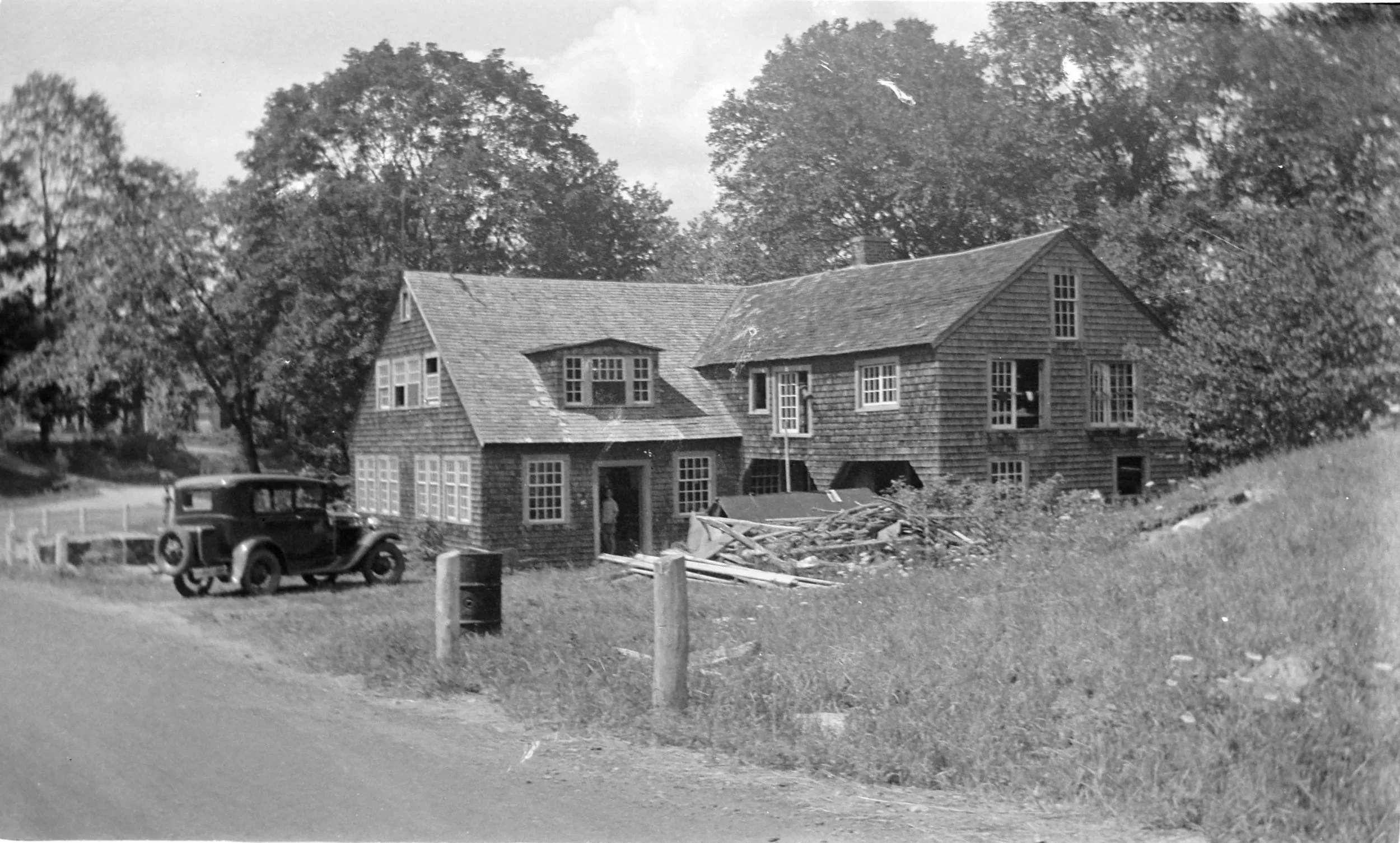
ALSTEAD - The Chase Mill was the first. And it is now the last — the last mill standing in town — which is why the couple who own the building are working to preserve it as a centerpiece of New Hampshire history.

Videos
Watch past presentations to learn more about Chase’s Mill and other local historical sites and topics.
The videos in the series “A Sense of Place” were made possible by a grant from New Hampshire Humanities and the National Endowment for the Humanities.

Breaking Bread: Noah Elbers & Orchard Hill Breadworks
Our “A Sense of Place” series explored the stories, history, and qualities that make Chase's Mill and Mill Hollow unique with a tour of Alstead's Orchard Hill Breadworks and an interview with its founder, Noah Elbers, followed by a Q & A. Noah’s presentation featured the bakery’s new stone mill and highlighted the growing nationwide movement of artisan bakers who’ve chosen to work directly with the farmers who grow their grain.
Stories from the Holler: Suffragist, Reproductive Rights Activist, Artist, Writer - Mary Ware Dennett
In this “A Sense of Place” event, historian Dr. Helen Frink interviewed Sharon Spaulding about the remarkable Mary Ware Dennett, a woman ahead of her time. During her life, Dennett (1872—1947) was a leader in the Arts and Crafts movement, second-in-command of the National Suffrage organization in New York, founder of the first national birth control league in the U.S., and a champion of free speech and sex education.
An Evening of Poetry and Music from "The Holler"
This “A Sense of Place” event featured Alstead artists Ellen Chase and Randy Miller. The evening alternated between Ellen reading her poems from her latest collection, A Cow Named Joy (as well as a few poems by her mother, Edith Chase, written in and about Mill Hollow), and Randy playing old fiddle tunes that relate to milling. Randy also performed one of his own compositions, “Mill Hollow Reel.”
Ellen Chase grew up in Alstead, then lived in various other parts of the country for 50 years before returning in 2007. She has a BFA in illustration from the Mass College of Art and an MFA from Syracuse University, and has had several solo shows of her paintings. Her occupations have included potter, carpenter, scientific illustrator, software designer, and most recently, teacher of poetry courses through the CALL program at Keene State College. She considers her study of illustration to be a good foundation for poetry writing, as both arts depend on sensory information, metaphor, and imagery to create an emotional effect.
Randy Miller comes from a musical family—he and his three siblings all took music lessons while growing up. He has played fiddle and piano at contra dances and Irish sessions nationwide for more than 40 years and has recorded six albums of traditional New England and Irish fiddle music. Randy co-hosts several regular Irish music sessions in Hanover, Newport, and Peterborough, and is the dance fiddler for The Inn at East Hill Farm. Randy moved to Mill Hollow in the spring of 1973, renting “The Corn Crib” from Mary Burroughs. In 1975 he was commissioned by author Heman Chase to make several wood engravings for Heman's book, More Than Land.
Water Works
This “A Sense of Place” event was hosted by Bob Brown and Helen Frink. Bob, who took many shop classes at the Mill, offered a virtual tour of its water power. Helen, an author and historian, discussed the history of mills and their importance in the development of manufacturing in New England.
Robert Brown hold an AB from Dartmouth College in Earth Sciences and an MA from Antioch New England University in Education. Bob has worked for Thompson & Lichtner Co. as Staff Geologist and for the Research Corp of the University of Hawaii in marine geophysical research prior to settling on a career as a public school science educator and later Director of Curriculum and Instruction for the Fall Mountain Regional School District. A former member of the Alstead Conservation Commission, he has a long history of personal connection to Chase’s Mill over the last 60 years.
Helen Frink holds a BA in English from the University of New Hampshire and master’s and doctoral degrees in German from the University of Chicago. She retired from Keene State College as Professor Emerita of Modern Languages in 2009. She is the author of These Acworth Hills, Alstead Through the Years, Women after Communism: the East German Experience, and Oil, Ice and Bone: Arctic Whaler Nathaniel Ransom. She is descended from two families of Yankee whalers and lives too far from the sea in Acworth, New Hampshire.
Stories from the Mill: Shop Classes with Edith & Heman Chase
At this “A Sense of Place” event, we continued to explore the stories, history, and qualities that make Chase's Mill and Mill Hollow unique. A few people who took part in those legendary Shop Classes taught by Edith and Heman Chase reminisced about their experiences and shared what they learned not only about woodworking, but also about life. With the Chases’ grandson, Jonathan Botkin, serving as our moderator, we also explored why we believe it's important to create similar opportunities and connections for current and future generations.
Jonathan Botkin is a mechanical engineer who has worked on renewable energy for the past 30 years. In his youth, he spent much time in the mill with Heman, learning about water power, woodworking, and even a little bit about land surveying. Jonathan lives in California with his wife and son and their three dogs.
Winter Then and Now
This “A Sense of Place”event explored the stories, history, and qualities that make Chase's Mill and Mill Hollow unique with "Winter Then and Now," hosted by author, historian, and Board Co-Chair Helen Frink. Helen shared a marvelous slideshow of Mill Hollow photos taken in winter over the years, and she moderated a panel discussion about how people worked and played. Friends of Chase’s Mill also shared memories of winter work and winter fun from years back.
Chase’s Mill: A Brief History and Plan for its Future
Near the middle of the town of Alstead, New Hampshire, nature created a small gorge with brook running through and bed rock near the surface, an ideal location for the placement of mills. Less than a quarter mile upstream is a small lake, called by the first settlers, the Great Pond, which offered a steady supply of water. The length of the gorge proved sufficient for as many as five mills and their related buildings operating together, and these mills became the economic base for the small, but busy, industrial center known as Mill Hollow. This video talks about this history and the future plans for the last remaining mill, Chase’s Mill.
Seven to Save
In 2009, the New Hampshire Preservation Alliance named Chase’s Mill to its “Seven to Save List.” The Preservation Alliance’s endangered properties list aims to draw attention and resources to irreplaceable New Hampshire landmarks. Listing provides a range of technical and financial support and helps attract roll-up-your-sleeves help for local advocates and their preservation projects. In October 2019, the Preservation Alliance filmed several Seven to Save champions, including MHHA board members Bob Brown and Helen Frink, about their projects, all at various stages of completion.